Underpass decision shows lack of commitment

A142-stuntney


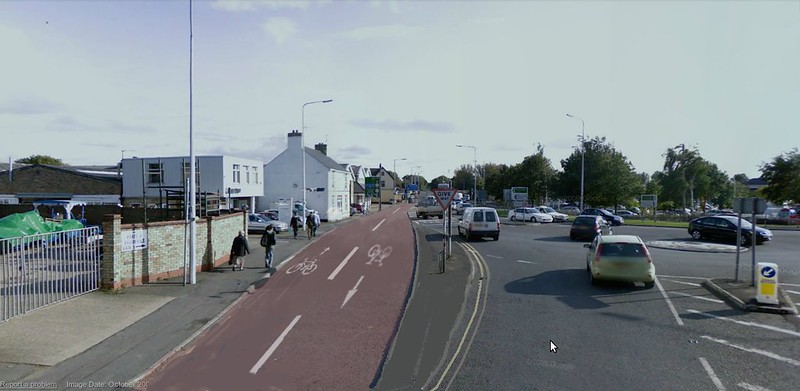
We have been repeatedly promised by County Council officers that the new southern bypass would include an underpass so that Stuntney and beyond are not cut off from Ely by it. This is a problem that the villages around Ely all suffer from and so ensuring it was avoided with the new bypass seemed like progress and forward thinking.

Unfortunately it seems that was all hot air and when it comes down to it the County Council’s commitment to cycling in rural areas is pretty non-existent.

From Cambridge News:

Councillors met yesterday (February 9) at Cambridgeshire County Council’s environment and education committee. They voted to recommend work on the cycle underpass cease after it was revealed the work to build it would be far more expensive and difficult than previously expected.

It had previously been thought the underpass would cost £30,000. Final estimates, however, placed the overall figure at more than £1 million over the initial budget.

This might seem like a sensible decision without some context.

Firstly, the County Council is supposed to be committed to sustainable transport and encouraging cycling in particular.

From the County’s Local Transport Plan [PDF]

Countywide, we will continue to push forward in making sustainable modes of transport more attractive by continuing to develop sustainable networks for walking and cycling, making it easier for people to change between modes of transport and working with bus operators to provide high quality bus services. In addition, we aim to improve the environment and safety for pedestrians, cyclists and public transport users, in accordance with our user hierarchy and focus on raising awareness of the transport choices available, including the health and environmental benefits of cycling and walking. This will include work with local planning authorities to ensure provision for sustainable modes that form an integral part of new developments.

Secondly, the cost. £1 million sounds a lot (which it is) but, it’s less that 3% of the cost of the bypass.

Thirdly, the crucial nature of the underpass. It’s the best solution for all road users. It provides a safe way for pedestrians, cyclists, mobility scooter users etc to cross the new bypass without affecting the traffic flow. The Cambridge News mentions a “safe crossing” being planned. If this doesn’t include traffic lights then it’s not a safe crossing and will leave those who live in Stuntney and beyond cut off from Ely.

From this report in the Ely Standard we’re told:

[Brian Stinton, team leader for major infrastructure and highways]’s report noted that current cycling usage is low – around 45 per day- and even with improvements this is unlikely to grow significantly.

This logic beggars belief. The County council has spent lots of time and resources asking what puts people off cycling and the answer is always the same, lack of safe routes. Brian’s logic here is that low usage caused by a lack of a safe route justifies not building a safe route. We note that no evidence is given for his assertion that “this is unlikely to grow significantly”.

This is a fundamentally short-sighted decision showing that the Councillors have little commitment to sustainable transport in rural areas.

We’d like to know:

  1. If there’s not going to be an underpass, what kind of safe crossing is going to be provided?
  2. Are the promised improvements around the station we’ve also been promised going to happen?
  3. How many other schemes we’ve been told are on the cards will be shelved in a similar manner?

The County Council really needs to demonstrate that its commitment to cycling and other forms of sustainable transport extends beyond routes in and around Cambridge.
Draft Transport Strategy for East Cambridgeshire: A cycling perspective

Cambridgeshire County Council have started consulting on their Draft Transport Strategy for East Cambridgeshire [PDF].

They have drafted the strategy to tackle the current and future transport pressures in and around the district, and to help support growth in East Cambridgeshire. The purpose of this strategy is to:

  • Provide a detailed policy framework and Action Plan of potential transport improvements for the area, addressing current problems and consistent with the policies of the third Cambridgeshire Local Transport Plan 2011-2031 (LTP3).
  • Support the East Cambridgeshire Local Plan, and take account of the committed and predicted levels of growth, detailing the transport infrastructure and services necessary to deliver this growth.

The strategy contains details of the schemes proposed in the short and medium term as well as the longer term schemes as proposed in the Long Term Transport Strategy.

There is a survey which allows you to give your opinions on the strategy.

We’ve had a thumb through the strategy to see what it says about planned cycling improvements.

The strategy’s main objectives

It’s clear that cycling can be part of the solution for all of the strategy’s objectives and can directly help achieve objectives 4, 5 & 6.

Strategy Objectives

Ensure that the Transport Network;

  1. Supports the economy and acts as a catalyst for sustainable growth
  2. Enhances accessibility
  3. Connects new and existing communities with jobs and services
  4. Prioritises sustainable transport alternatives and reduces impact of congestion on these modes
  5. Contributes to reducing transport’s contribution to air quality emissions in particular NOx, PM10 and PM2.5 – the main transport related pollutants
  6. Encourages healthy and active travel and supports people’s well-being

The approach

It’s good to see the approach to the strategy has a dedicated section on cycling and walking and that it mentions the provision of a network, something which is core to our strategy.

The Strategy Approach

Mode

Strategy Approach:

Public Transport
  • Connect major engines of growth along main transport corridors
  • Minimise need for interchange
  • Work with developments – contribution to Public Transport
  • Technology- ensure information about travel options easily available.
Rail
  • Build case for opening new stations
  • Support– capacity, frequency and journey times improvements
  • Sustainable access to stations
Rural
  • Rolling programme of review for rural bus services
  • Support community transport solutions
Cycling and Walking
  • Investment in cycle and pedestrian network
  • Enhancing and adding to network
  • Improve Cycle network around Ely
  • Enhance and develop around key destinations in rural areas
  • Comprehensive longer distance network across district
  • Enhance cycle parking
  • Ensure new developments provide high quality linkages.
  • Where possible seek to segregate cyclists from general traffic, particularly on main transport corridors / busy rural routes. – Balance between usability, convenience, traffic and safety concerns.
Road
  • A number of areas require measures to be introduced for capacity reasons
    • The A10 connecting the district with Waterbeach and Cambridge
    • The A10 connecting Ely, Littleport and Downham Market
    • The A142 connecting Chatteris to Newmarket via Ely
    • A1123
  • Measures to reduce inappropriate through traffic and encourage all traffic to use the most appropriate route, particularly HGVs.


The last point in the Cycling and Walking section is worded with a few too many caveats.

  • Where possible seek to segregate cyclists from general traffic, particularly on main transport corridors / busy rural routes. – Balance between usability, convenience, traffic and safety concerns.

We (and the county) know that what puts most people off cycling more is having to mix with traffic. Segregated routes are essential and should not be something that’s only provided “where possible” after striking a “balance” with “traffic”.

We’d like to see a more strongly worded commitment to segregated routes.

The last point in the Road section is good to see, redirecting through traffic (esp. HGVs) away from urban roads (like King’s Avenue) will make these routes more cycle friendly.

  • Measures to reduce inappropriate through traffic and encourage all traffic to use the most appropriate route, particularly HGVs.

Details of the approach to cycling provision

There’s a whole section that details how cycle and pedestrian networks will be enhanced. It’s all very positive, treating cycling as a positive alternative method of transport and discusses improving the quality of provision. It feels a bit cut and pasted from a generic transport policy for any district in the county, but actually that points to a standard approach across the county which is not a bad thing.

The cycle and pedestrian networks

Greater levels of walking and cycling are critical if existing traffic problems are not to be exacerbated and investment in the cycle and pedestrian network is therefore one of the key investment priorities in this strategy. The benefits of walking and cycling reach much further than simply keeping additional vehicles off the road; walking and cycling contribute to the health agenda, and can provide those without access to a car or a good public transport service to take advantage of opportunities to access employment, training and other essential services.

We will look to increase the levels of walking and cycling trip in East Cambridgeshire:

  • Increase walking and cycling levels in Ely and its hinterland by enhancing and adding to the current networks.
  • Develop the cycle network in and around Ely, providing greater opportunity for cycling to replace the use of the private car for more trips into the city.
  • Provide greater opportunity to walk and cycle in Soham and Littleport by enhancing their pedestrian and cycle networks, with higher quality links to more key destinations.
  • Enhance or develop rural cycle and pedestrian networks around key destinations in the rural area such as village colleges, larger village centres, major employment sites, doctor’s surgeries, and transport hubs on the main transport corridors.
  • Develop a comprehensive longer distance cycle network across the district.
  • To enhance cycle parking provision across the county, recognising that the lack of secure areas to park a bicycle can be a deciding factor in the choice to cycle.
  • Ensure that developments in all areas of the county provide high quality linkages into existing pedestrian and cycle networks, and to key destinations where new links are needed.

We will seek to raise the standard of provision so that walking and cycling will be a more obvious choice for many more medium and longer-distance trips, for either the whole or part of the journey. Where possible we will seek to segregate cyclists from general traffic, particularly on the main transport corridors and on busier rural routes. However, there are areas where on road provision will be the most appropriate solution for cyclists. In practical terms, there is a balance between usability, convenience, traffic and safety concerns that needs to be considered. Safe but inconvenient off-road routes are often not well used.

Cycling related schemes

There’s a pretty long list of cycling related schemes (listed below are those for the northern end of the district). It’s good to see several of the schemes we’ve campaigned for on the list inc. the bridge over the A10, the underpass to Stuntney and a route from Soham to Ely.

However, there are some notable omissions, including:

  1. Improving cycle access to the station after the southern bypass is built.
  2. Widening the route from Lancaster Way into Witchford.
  3. Widening the route along the road to Little Downham (instead a scheme along the bridleway which is included).
  4. Improving cycling through the Porta area of Ely – inc. dealing with the cobbles.
  5. Cycle specific improvements to the Broad Street / Station Road junction (although there is a scheme to improve safety there).

Scheme

Reference

Schemes

Relevant document/ Source

Timescale

Cost

£ <10k
££  <250k
£££  <500k
££££ >500k


E-1 Cycle bridge over the A10 with upgraded link to Lancaster Way Ely Modelling Study (2009) TBC £1M
E-2 Cycle route Lynn Road – High Barns via New Barns Ave
(Options – on-road lane, shared use path)
Ely MTTS (2009) By 2026  ££
E-3 Feasibility study for Cycle route: Western Boundary
(Options – on-road lane, shared use path)
Ely MTTS (2009) By 2026  £
E-4 Cycle route: High Barns – New Barns
(Options – on-road lane, shared use path)
Ely MTTS (2009) By 2026  ££
E-5 Cycle route: High Barns estate/Lynn Road crossing
(Options – on-road lane, shared use path)
Ely MTTS (2009)  By 2026  ££
E-6 Additional cycle parking provision
Stands in the corner along the edge of the Market Square in the corner opposite the war memorial.Stands on Market Place and other locations
Additional stands in the Cloisters area and other locations
Ely MTTS (2009) By 2026 £
E-7 Shared use footway/cycleway on the Eastern side of Lisle Lane from Prickwillow Road to Cresswells Lane. Ely MTTS (2009) By 2026  £££
E-8 Route along Cam Drive connecting Kings Avenue to Lynn road Ely MTTS (2009)  By 2026  £££
E-9 Pedestrian and cycle link (bridge) to connect Summer Hayes (off Henley Way) to Merivale Way
Bridge between Henley Way and Merivale Way – Linking two large housing developments and connecting into the Lisle Lane route. This route would also connect up the Ely North development
Officer working group  TBC  ££
E-10 Cycle Route St Johns Road – Tower Court Area  Ely MTTS (2009)  TBC ££
E-13 Broad Street/Back Hill junction changes
Safety Improvements
Ely MTTS (2009)  TBC  ££
E-14

Cycle / pedestrian underpass associated with Ely Southern Bypass

In order to facilitate the Ely – Stuntney – Soham cycle route

Officer working group By End of 2017 ££
E-20 Improved cycle and pedestrian access
Creation of a new circular pedestrian route to the north, south and east of Littleport
Town Vision 2012 £££
E-21 Improved pedestrian and cycle access
New routes to Little Downham and Ely (Bank Branch between Littleport and Ely – steep embankment may be an issue for off-road route) or Ely Road – Lynn Road
Town Vision  TBC £££
E-25 Soham Town cycling network
Hall Street
Pratt Street
High Street
Paddock Street
Townsend Road
High Street
Sand Street to connect with Fordham Road
(Options – on-road lane, shared use path)
Soham Masterplan (2010) 2021/2026 ££
E-26 Cycle route: Soham to Ely (via Stuntney) (9.6km)
Link in with routes above and also to Soham to Wicken Fen listed below
Ely Cycling Campaign TBC £££
E-28 Cycle route: Soham to Wicken Fen
(Options: Off road route connecting to NCN 11) links to Soham to Ely scheme above
Village Vision TBC £££
E-39 Cycling improvement
Improve bridleway to create cycle route from Little Downham to Ely (investigate opportunitiesfor improvements to NCN 11)
Village Vision TBC ££
E-43 Foot/cycle path extensions required in the Wyches from the cemetery to A10 (££)(may require land take) and between Little Thetford and Stretham (£££) East Cambs Parish Forum (2015) TBC ££-£££
E-45 Cycling improvement
Segregated cycle route along A142 from Sutton to Mepal
Village Vision TBC £££
E-50 Walking and cycling improvement
Investigate Pedestrian / Cycle route (shared use or segregated) between Stretham and Ely
Officer working group TBC £££
E-62 Pedestrian and cycle improvement
Pedestrian / Cycle route between Wilburton and Cottenham
Village Vision TBC ££££
E-67 Cycling improvement
Improvements from Wentworth junction – connect to existing segregated shared use provision
-signage / surface improvements
East Cambs Parish Forum (2015 TBC  ££

The train companies want to know about your train-bike use

The number of cycle-rail users is growing each year and so it’s important that the Association of Train Operating Companies, understand how best to provide you with helpful information when you’re planning a rail journey with a cycle.

They want to make your cycle-rail journey as simple as possible with the view to clarify information around station cycle facilities, hire schemes nearby and cycle restrictions on board trains.

Take their short survey which will take between 10-15 minutes to complete. As a thank you for your time all completed surveys will be entered into a free prize draw where four lucky winners will win £25 worth of Amazon gift vouchers each.

The survey and prize draw will close on 31st January. Details of how to enter can be found at the end of the survey.

Take the survey.

Is the Witchford to Sutton cycleway any good?

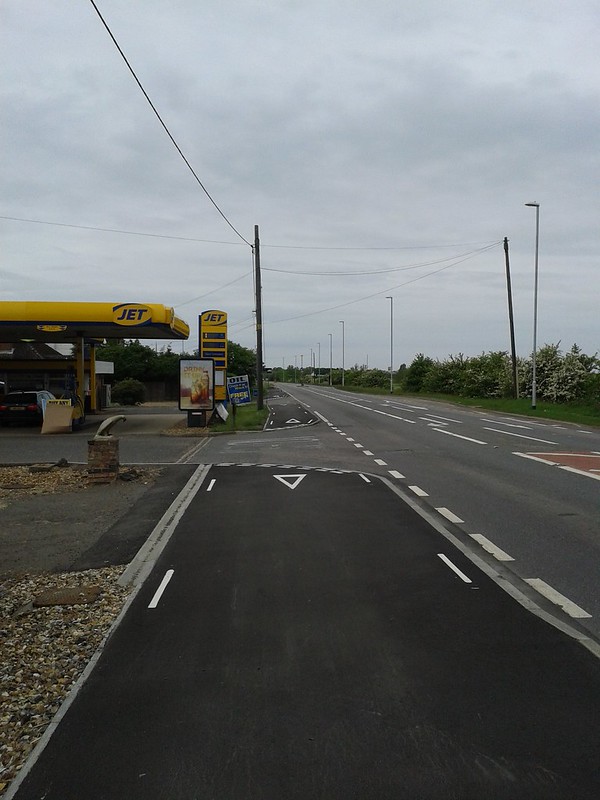
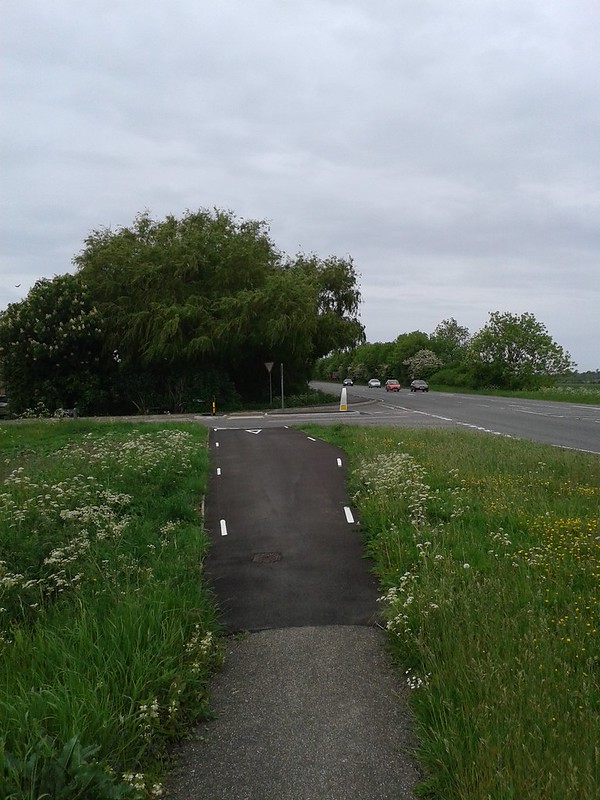
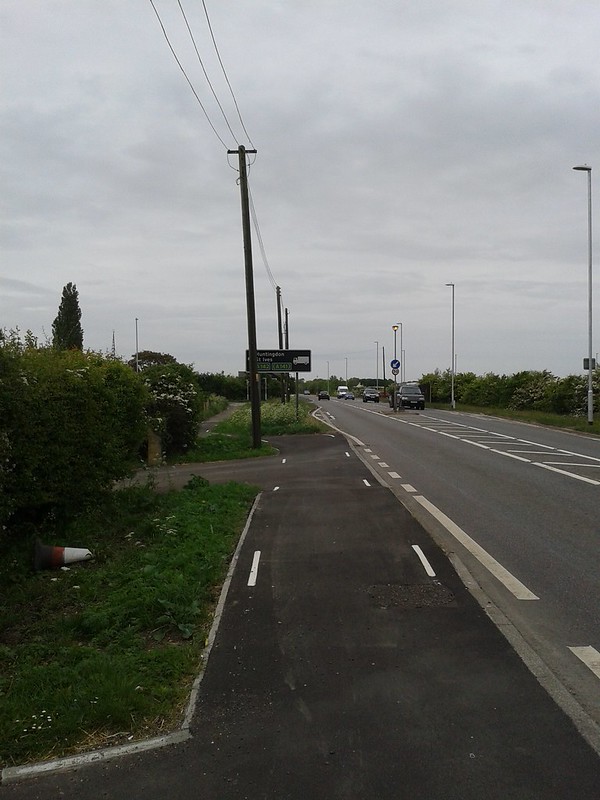
20150523_112412The new Witchford to Sutton cycleway in now finished (except some tidying up around a new street lamp) with a grand opening at 3pm on the 2nd of June . So, is it any good?

The good

– There is a route

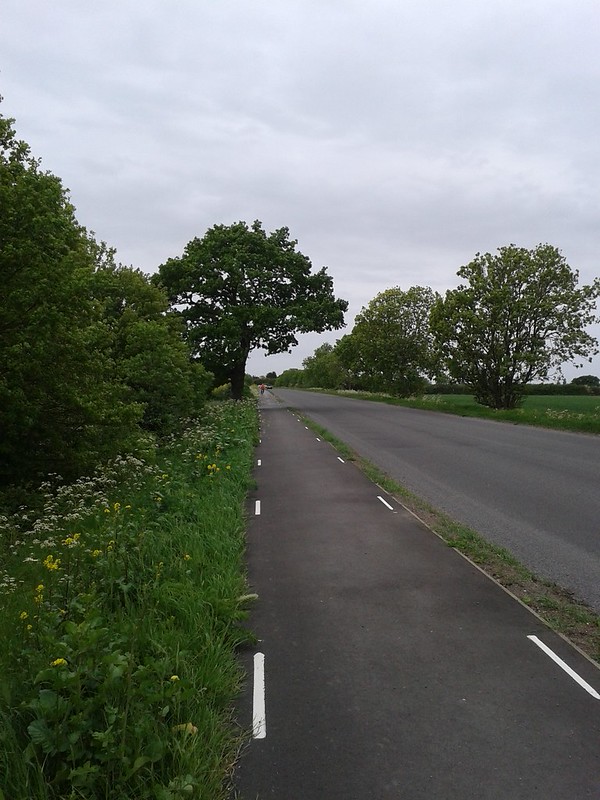
There is now a complete route. The new section, combined with re-purposed footways and defunct pieces of old carriageway give a complete route from Witchford to Sutton for the first time.

Before now, riding between Sutton and Witchford involved either riding on the busy A142 or taking a long detour along narrow country roads. The A142 is a busy A road with fast moving traffic including lots of HGVs. Riding on it was extremely unpleasant bordering on dangerous.

The new route runs alongside the A142 but is segregated from it. No more mixing it with all that heavy traffic. This is a huge improvement.
20150523_112505–  Adequate width

The stretch of the new section along the open road is an adequate width to allow bikes to pass each other or pedestrians. It’s not as wide as we’d really like but given the available space, the county engineers have attempted to make it as wide as possible.

– Smooth surface

All of the new section has a nice smooth surface to ride along. This might seems like something to take for granted, but it’s not (see later re: the lead-in footway sections). It also doesn’t have big drops at the places where it is crossed by field and driveway entrances.

– Segregated

The whole route is segregated from the traffic and most of it has a verge between the traffic and cycleway. The verge isn’t as wide as we’d ideally like but again there are space restrictions. Despite being narrow the verge makes a difference, the sections with it feel safer and have less debris thrown up from the carriageway as the traffic is further away.

20150523_113524The bad

– The lead-in footway sections

The new section of cycleway is connected to Witchford and Sutton using existing sections of footway. As far as we understand, this was mainly to stay within budget.

The footway sections are far too narrow, it is not possible for 2 bikes to pass or for bikes to pass pedestrians, remember this is supposed to be a 2-way cycle route.

The footway sections also have terrible surfaces. Riding along the section at the Sutton end any faster than “extremely sedate” risks losing fillings. The section at the Witchford end has large cracks in the surface, one in particular is wide enough to swallow a bike tyre.

Both of these footway sections have ample space to be made at least as wide as the new section, if not wider. We’ll obviously now be pressing for these sections to be upgraded to at least the same standard as the new section.

20150523_112833The ugly

There are several elements of the new work which are not as good as we’d like, some of which we raised with the county during the consultation, some of which we weren’t consulted on.

20150523_112200– Side roads and entrances

We asked for the cycleway to have priority over both of the side roads, and all the entrances to the private properties along its length.

We were overruled on the side road priority by the road safety assessment. This is a national issue and it seems that until the national guidance changes it’s going to be very difficult to to get priority at side roads. For this scheme there are only 2 side roads and the engineers have altered both to mitigate the lack of priority to a certain extent.

The cycleway has priority over all the entrances to private property except the entrance to the filling station. Again we asked for the cycleway to have priority here and we’re not sure why it doesn’t. We’ll be chasing this up obviously. To add to this, the kerbs aren’t flush with the level of the cycleway and give quite a jolt (enough to dislodge a rear LED light) if you cross them at speed.

20150523_112907– The S bend in Witcham Toll

In Witcham Toll the route has a sharp S bend to avoid a telegraph pole and a road sign. The telegraph pole carried power lines when the route was designed. While the cycle route was under construction the power lines were buried (we’re not certain if this was a coincidence). The pole now only carries telephone cables and so should be relatively easy and inexpensive to move, so we’re not sure why it hasn’t been. It’s also not obvious why the road sign hasn’t been moved either. Moving the telegraph pole and road sign would smooth out the tight S bend in the route.

20150523_113608– The old road at the Sutton end

At the Sutton end the route uses the old road avoiding the roundabout on the A142. We weren’t consulted on this section and there are several issues with it.

The Witcham Toll end has a gap in the barrier which is only wide enough for a single bike, again remember this is a 2-way route. This gap leads onto the old footway and just past it the route has a sharp left turn and drops on to the old carriageway. We would have suggested a different approach here and we’ll be looking for it to be improved.

The old road has a large pile of earth half way along it. To open up the cycle route a gap has been dug through but the gap is only wide enough for a single bike creating another single file point on this 2-way route.

The Sutton end of this section is similar to the Witcham Toll end. We would have asked for a much better design here, but we weren’t consulted.

20150523_114043– Witchford and Sutton

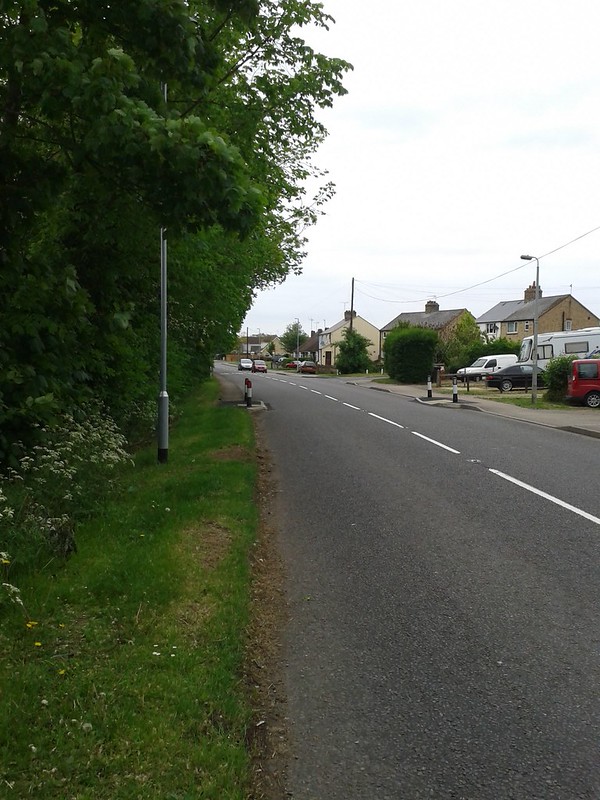
The 2 villages at either end of this route have no cycle infrastructure through them at all. In Witchford this is annoying but as it’s a relatively quiet village with a bypass it’s not terrible. In Sutton however the road is busy with lots of traffic including large HGVs.

Conclusion

It is great that there is now a ridable route between Witchford and Sutton.

The newly built section is as wide as it can be, smooth and pleasant to ride along. It’s not perfect but its deficiencies are relatively minor and can hopefully be ironed out.

The major issues with the route as a whole are on sections which haven’t yet been properly tackled. We’re hoping these sections can be upgraded soon.

There’s a full set of pictures of the new route on Flickr here.

Local Party District Council Manifestos

Here’s a summary of the District Council specific manifestos produced by the local political parties (in alphabetical order) and a look at what they have to say about cycling.

Conservatives – [full manifesto (pdf)]

  • Freeze the East Cambs element of Council Tax for 2016/17
  • Support more Community Land Trusts in other communities
  • Aim for a 60% recycling rate and ensure bins are put back tidily
  • Oversee delivery of the cinema
  • Deliver the leisure centre in Ely and review and support leisure services throughout the district
  • Push to ensure the Ely Bypass is built
  • Keep free car parking in our city and town centre car parks
  • Seek to increase car parking spaces at Littleport Station and Angel Drove, Ely
  • Use the business rates retention fund on business development, creation of new jobs and opportunities for young people

No mention of cycling in the manifesto at all.

Greens – [full manifesto (pdf)]

  • Decent homes
  • Better transport
  • Healthcare closer to home
  • Local economy

Specifically mentions making cycling safe and convenient

The Green Party will fight for investment in better, more affordable bus services, get behind new rail stations at Ely North and Soham, and invest in the infrastructure to make walking and cycling safe and convenient for shorter journeys. We will fight for sustainable transport to be a central part of the design of new housing developments, rather than sprawling cardependent estates which characterise so much new development. We’ll also make sure there is long-term support for community transport, which many people rely on.

Liberal Democrats – [full manifesto (pdf)]

  • Stand up to housing developers and insist that more homes are affordable, pavements and paths are built early, rather than not at all, and houses are built to higher environmental standards.
  • Promote better facilities for pedestrians and cyclists throughout the district.
  • Work towards a better recycling service that recycles more and is responsive to residents’ needs.
  • Spend the proceeds from housing developments fairly across the district, not on expensive, prestige schemes.
  • End the policies that damage the viability of shops in Ely city centre.
  • Prioritise help for those on low incomes.
  • Not increase the council tax this year or next and in future years keep any increases in council tax to a minimum.

Cycling gets a mention in the summary

The manifesto is littered with other mentions, including insisting on segregated cycle infrastructure

4. Better housing – for the benefit of people, not developers

4.5.8 Prioritise the building of paths for pedestrians and cyclists so that they are finished before residents move in, rather than being still unfinished ten years later;


5. Getting about more easily

5.1 Travelling around East Cambridgeshire is far too difficult without a car. Liberal Democrats want to make it easier for people to walk, cycle and use public transport to get about, to try to avoid increases in traffic congestion.

5.2 East Cambridgeshire, being relatively flat, ought to be ideal for easy walking and cycling: but it is amazingly difficult to cycle safely between small villages such as Stetchworth and Woodditton, and cycling provision in the new developments of Ely is far poorer than it ought to be.

5.9.1 Prioritise better facilities for pedestrians and cyclists across the district.

5.9.3 Seek to improve lighting on existing and new pavements and cycle routes, subject to the limitations of the disastrous street-lighting contract imposed by the Conservative County Council.

5.9.5 Insist that strategic, dedicated cycle routes in new developments are properly segregated from pavements for pedestrians.

5.9.6 Work with the County Council to improve safe cycle routes to and from the villages of East Cambridgeshire.


6. Leisure, recreation and shopping

6.6.1 Insist that any new leisure and recreation facilities are properly served by public transport and connect well to the rest of Ely for pedestrians and cyclists.


7. Tackling poverty, isolation and poor health

7.2 Better facilities will encourage more walking and cycling boosting people’s physical and mental health while better public transport will reduce the stresses of commuting and help people’s well-being and work-life balance.


[We will add Labour, and UKIP manifestos as and when they become available].

Profiles of the candidates

Ely Standard have profiles of all the district council candidates – here

Our response to Councillor Hunt’s recent comments on cycling

Ely Cycling Campaign would like to respond to recent comments about cycling reported in the Cambridge Evening News (and also Cycling Weekly and road.cc) made by one of our local councillors, Bill Hunt, Conservative County Councillor for Haddenham and District Councillor for Stretham.

In a meeting of the highways and community infrastructure committee Councillor Hunt is reported to have said:

“I think cyclists could contribute a bit to their safety and I think we should see if we can bring in some sort of local legislation to make it illegal to ride a bicycle without a helmet, and make it illegal to ride with one of those ridiculous flimsy tent things for their children.

“It seems unreasonable for us as a nanny state to make everything great and spend lots of money when the people themselves aren’t regulated and aren’t helping themselves with a crash helmet.”

We obviously totally disagree with these views which fly in the face of logic and have no basis in reality.

Helmets

We don’t want to get bogged down in a debate about the effectiveness of cycle helmets, as Chris Boardman, British Cycling’s policy advisor has said, helmets are not in the top 10 issues affecting cyclists in Britain.

However we do want to address the negative effect of mandatory helmet laws.

Getting more people travelling by bike rather than car is good for society as a whole.

It is well known that increased levels of cycling generally benefit society as a whole. Amongst other things cycling improves the environment by reducing air and noise pollution, improves the health of both those who cycle and (through reduced pollution) those who don’t which in turn reduces the strain on the NHS, and reduces congestion which improves traffic flow for all traffic.

Mandatory helmet laws reduce the number of people who travel by bike

It’s also well documented (for example from Australia) that mandatory helmet laws reduce the number of people who travel by bike.

Therefore, mandatory helmet laws are bad for society as a whole.

Better cycling infrastructure is required

What would benefit everyone is improved cycling facilities, as this has a huge effect on increasing the number of people who travel by bike rather than by car. You only have to look at countries like the Netherlands where huge numbers of people of all ages travel by bike everyday to see the effect good infrastructure has.

In Cambridgeshire everything is not great

Councillor Hunt claims lots of money has been spent on making everything great.

We’ve got news for Councillor Hunt, lots of money hasn’t been spent and things are a very long way from great.

No dedicated funding for cycling

The County Council has no dedicated funds for cycling infrastructure, all cycling improvements are funded by handouts from either developers or central government. This means that very little is spent on cycling within the rural parts of the county (like East Cambridgeshire the area Councillor Hunt represents) with Cambridge City faring only slightly better.

In the last 10 years around £500,000 has been spent on cycling in East Cambridgeshire. Most of that money (70%) being spent in the last 2 months on a single scheme comprising of a sinlge mile of segregated cycleway. We’re not sure how this can be classed as ′′making everything great′′.

Out of step

It seems that Councillor Hunt’s views are out of step with what’s good for the community he represents, the County’s stated policies (to encourage sustainable alternatives to the private car, including […] cycling), as well as the ethos of his party (the Conservatives being traditionally a party of small government not one that proposes additional unnecessary legislation), and other Conservative County and District Councillors who have supported improved provision for cycling in East Cambridgeshire.

Perhaps Councillor Hunt’s declared interest as a ″Consultant to the motor industry″ is the true reason for his odd outburst. We might be old-fashioned but we feel it would be nice if councillors represented their communities rather than large industrial interests.

Time for a change?

Councillor Hunt’s seat on the District Council is being contested this May and his County Council seat will be contested next year.

Perhaps the good people of Stretham and Haddenham will decide it’s time for a change of council representation.

Why not apply to be a local councillor?

There are due to be elections for the District, City and Parish councils in our area in May (at the same time as the General Election).

The City and Parish elections are only held if more people apply than the number of available seats, otherwise all the applicants become councillors without an election. That’s what has happened in recent years, so the current City and Parish councillors weren’t actually elected.

Under the recently enacted localism legislation the City and Parish councils now have a much larger say in local affairs. They need to truly represent the local community. That will only happen if more people apply to be councillors and there are actual elections.

Anyone can apply to be a councillor for the area where they live, so why not apply?

If you are interested the forms are available from the ECDC website

They must be returned between 10am on 30th of March and 4pm on the 9th April


We’re asking Sir James Paice MP to support the Cycling and Walking Investment Strategy

We’ve written to Sir James Paice MP to ask him to vote for an amendment which adds a Cycling and Walking Investment Strategy to the Infrastructure Bill currently passing through parliament. This bill proposes the £15-billion road building plans which made the headlines late last year and investments for rail, but nothing substantial for cycling or walking.

The Strategy proposed in the amendment would be divided into four parts, setting out:

  • a long-term vision to increase walking and cycling rates across the whole population, in rural as well as urban areas;
  • a ‘Statement of Funds Available’ for the next five years that would be spent specifically on cycling and walking;
  • a detailed Investment Plan of programmes and schemes – for example to improve cycle-rail integration, retrofit safe walking and cycling paths along busy roads and give provincial towns and cities London-style cycling measures and exemplary public spaces;
  • a Performance Specification of measures and targets – for example increases in cycling and walking levels, improvement in safety, and the proportion of schools and stations with safe routes to them.

The amendment is being proposed by a cross party group of MPs and has the support of Campaign to Protect Rural England (CPRE), Campaign for Better Transport, CTC – the national cycling charity, British Cycling, Sustrans and Living Streets.

You can ask your MP to support the amendment using the CTC website – campaignwith.us/dxvYAs

Dear Sir James Paice MP,

On behalf of the members of Ely Cycling Campaign, I am writing to ask you to support an important amendment to the Infrastructure Bill.

Cycling and walking are the healthiest and least environmentally damaging ways to travel, but current plans for investment are set to drop steeply from 2016 and fall to less than £1 per person per year from 2018. 

A cross-party group of MPs is putting forward an amendment to the Infrastructure Bill that would introduce a Cycling and Walking Investment Strategy – to match the existing support for rail and the £15-billion, 5-year investment plan for roads that the Bill proposes. 

Please support this amendment, which could help transform the way people get around East Cambridgeshire, reducing congestion and pollution, and having a positive effect on health.

Your sincerely

Andy Shaw

Chair 


UPDATE:

Very hopeful news that the Infrastructure Bill now includes ‘Cycling & Walking Investment Strategy’ amendment – http://www.publications.parliament.uk/pa/bills/cbill/2014-2015/0154/amend/infrastructureaddednames.pdf

Will Ely Southern Bypass include the promised cycle routes?

cycle lane mock upNow the decision has finally been made to go ahead with the Ely Southern Bypass, work has progressed to the detailed planning and design stage. We’re hoping that we will soon get the first designs for the cycle routes that were promised as part of the scheme.

We have been in discussions with the Councillors, Council Officers and the Ely Allotment Society to ensure the bypass has benefits for those people who want to cycle. During these discussions we’ve been told that the scheme will include two cycle specific improvements.

  • Shared use route out to Stuntney
    The current cycle route to Stuntney is a footway that has been given shared use status. It crosses the busy A142 several times between Stuntney and Ely. The promised new route will be a continuous wide shared use path. It will run along the same side of the A142 from Ely station all the way to the village.
    We have been told the new route will go under the new bypass through an underpass, this is important as otherwise the new road would cut the route and making it pretty much useless.
    The new route also gives a cycle and pedestrian route to Ely Allotments, currently only really accessible by car, it connects to NCN11 and it is the first step to getting a cycle route along the A142 from Ely to Soham.
  • Two-way cycle lane to the station
    There are currently around 300 daily commuters who cycle to the station. This new 2-way route will give them a safe approach to the station.

At the recent Ely Cycle Forum meeting however, both of these were put into doubt due to lack of funding. Yet again it seems that short-sighted decisions that don’t take into account the benefits of cycling to the whole community may win the day. Some of the proposed changes are relatively cheap to do implement when the scheme is being built but extremely expensive afterwards. The underpass connecting Stuntney would be cheap to place into the raised foundations required by the road during construction, for example. As would positioning any 1-way traffic controls so that they gave a safe means for cyclists and pedestrians to access the station. If these are dropped from the plans it will be far too expensive to add them in later. We will have lost the opportunity for decades of safer cycling.

It’s been reported today that obesity is costing the county £47billion a year. One proven way to combat obesity is to provide cycling infrastructure which allows people to get out of their cars and use their bikes instead. Removing the cycle routes from this scheme would show a huge lack of vision by a County Council that is supposedly trying to get more of us cycling.